Technical
Self-drilling anchor bolts: the parameters that decide the specification
Diameter, wall thickness, load capacity, thread system and corrosion protection — a walkthrough of the technical parameters that decide which self-drilling anchor suits a given project.
Diameter, wall thickness, load capacity, thread system and corrosion protection — a walkthrough of the technical parameters that decide which self-drilling anchor suits a given project.
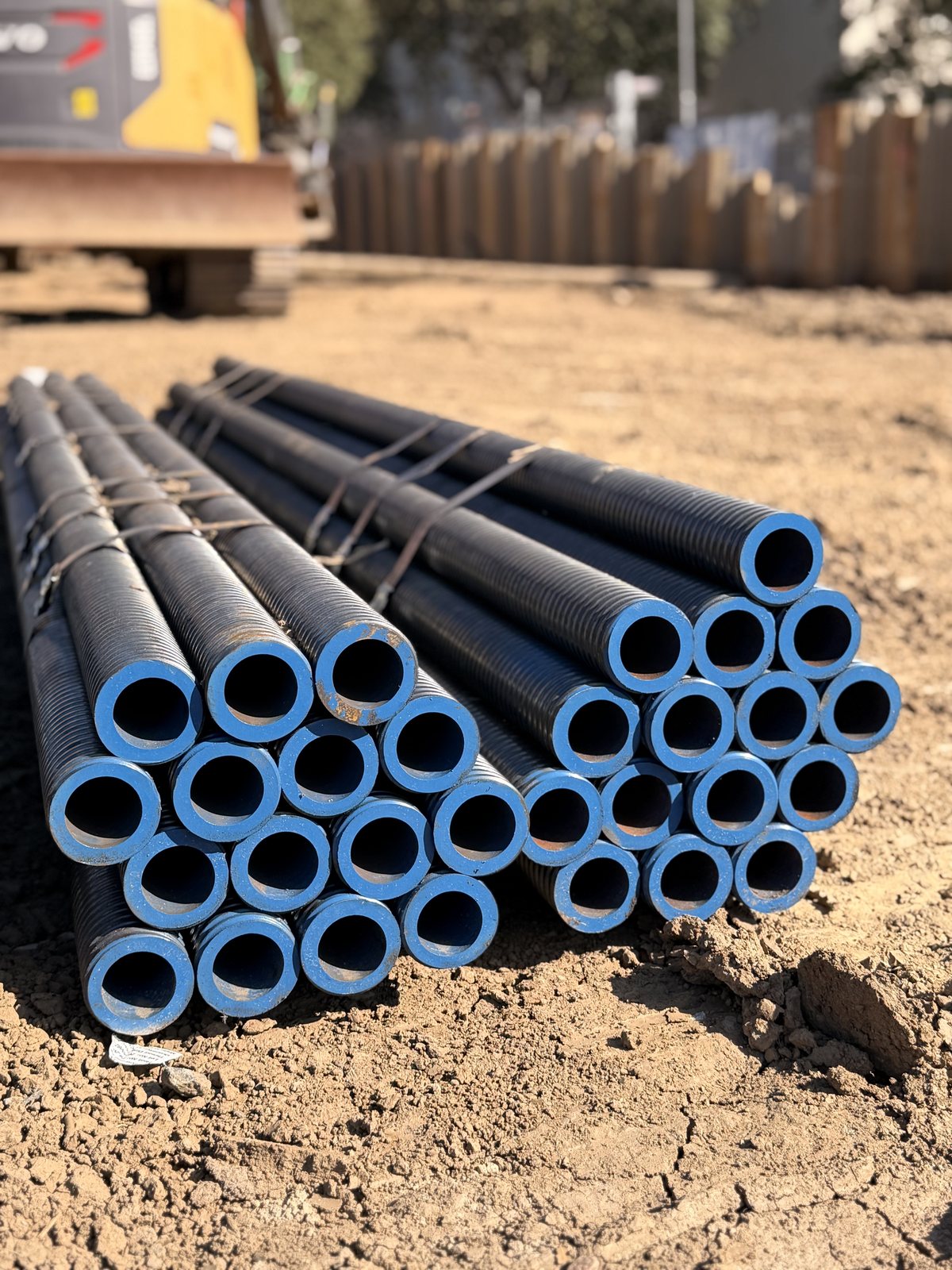
Dimensions. The outer diameter sets the cross-section and with it the load capacity: R25, R32, R38 and R51 in the R series, T76 in the T series. The inner diameter is the grouting channel — from 14 mm on R25N up to 52 mm on T76N — and a wider channel means better grout flow in loose or fractured ground. Wall thickness is the difference between the two and governs tensile, shear and bending capacity. Standard lengths run from 1 to 6 m, with up to 12 m available.
Load capacity. Ultimate and yield load differ sharply between specifications: R25N carries 200/150 kN, R32N 280/230 kN, R38N 500/400 kN, R51N 800/630 kN and T76N 1600/1200 kN. Typical tunnel design loads in European practice land around 300–400 kN, and prestressed anchors are normally designed for 200–400 kN.
Material. The bars are made from high-strength alloy steel — 40Cr, or the European grades S460, S500 and S650 quenched and tempered to EN 10083-1. Across the common specifications, tensile strength is around 800 N/mm² and yield strength around 650 N/mm².
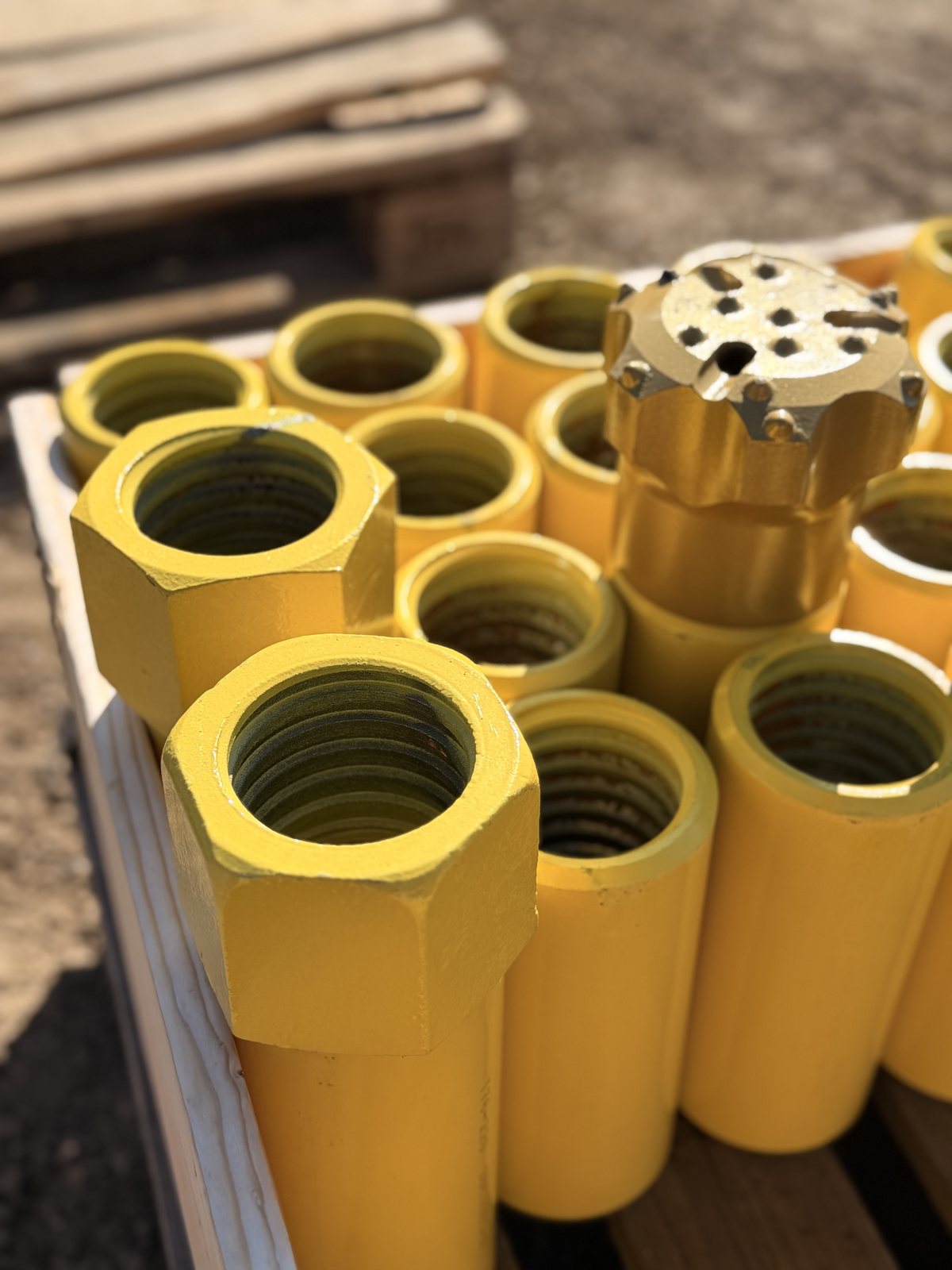
Thread system. R threads follow ISO 10208, with ISO 1720 for the R51 series, and use a rounded rope profile with coarse pitch that covers the standard range. T threads use a deep trapezoidal profile that gives roughly twice the bond friction at the same diameter, which is why they dominate micropiling. Both work with standard rigs from Epiroc, Sandvik and others.
Installation. Installation torque is normally 3–12 kN·m in European practice, and couplers need at least 300 N·m. The drill bit is chosen a step larger than the bar so the anchor goes in cleanly and the annulus can be properly grouted.
Corrosion protection. Hot-dip galvanising to ISO 1461 covers threads and couplers and keeps protecting after scratches — more than 50 years in moderate conditions. Epoxy powder coating, 200–500 µm, blocks chlorides and suits marine and chemically aggressive ground. The two combined, duplex protection to EN 13438, is specified for permanent structures where a service life of up to 150 years is required. Stainless steel is the choice for the most aggressive environments.
Standards. Beyond the thread standards, EN 10083-1 covers the steel grades, EN 14490 soil nailing and EN 1997 (Eurocode 7) the geotechnical design. ASTM F432 is the corresponding American specification for rock bolts.
Which specification is right depends on the ground, the loads and the working environment. Send us the conditions for your project and we will help you land on the right one.
Source: Sinorock, “Self-Drilling Anchor Bolt Technical Parameters: Complete Specification Guide”, published on 25 August 2026 on sinorockco.com. The figures refer to Sinorock’s range.